EXECUTIVE CASE STUDY BUSINESS DEVELOPMENT
Turning Business Inquiries
into Relevant Responses
An anonymized case study of an AI assisted business development workflow
Executive summary
A new inquiry creates a commercial decision before it creates a writing task. The business must decide what the prospect needs, where its own offer fits, what it can credibly promise, and which next step matches the recipient’s readiness.
For a growing business services firm, that work draws on company positioning, consultant relationships, delivery arrangements, prior collateral and the knowledge of senior leaders. Reconstructing this context for each inquiry can make a routine response depend on scarce management attention.
The firm used a business-context assistant to bring those inputs into the preparation of each response. With an inquiry and relevant company material supplied, the assistant assessed the opportunity and drafted aligned emails and supporting notes. The business owner remained responsible for judgment, commitments and release.
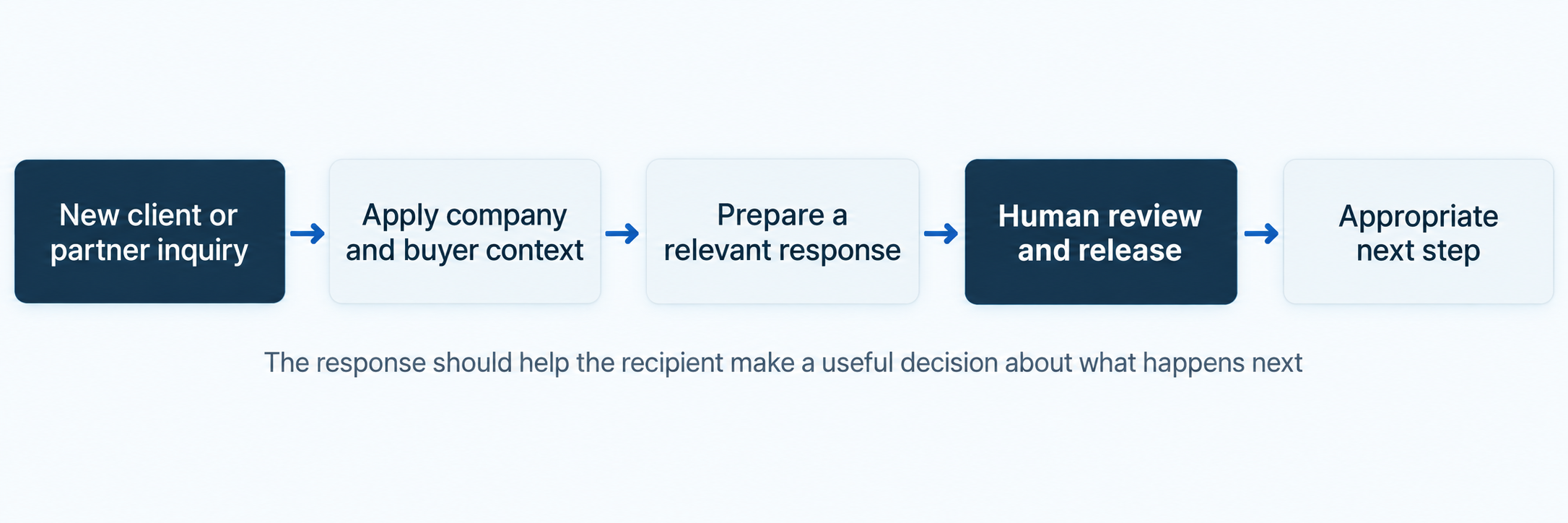
Figure 1. The inquiry to response workflow at a glance
What the evidence shows
Two real partnership inquiries produced materially different response approaches. One prompted a substantive advisory-to-implementation proposition. The other prompted a lighter explanation that respected an early-stage business and its request to defer a call. The drafts addressed fit, responsibilities, commercial structure and relevant examples.
The demonstrated capability is to apply accumulated business context to a live inquiry and produce a coherent response set for human approval.
Evidence boundary. The reviewed material supports context-aware analysis and drafting. Turnaround savings, staff capacity, recipient acceptance and sales conversion have not been measured. This case does not claim autonomous selling or a closed deal.
How the workflow changed
The workflow begins when a prospect or partner asks for information. Business development needs to interpret the request; leadership supplies commercial judgment; delivery specialists clarify feasibility where needed. The output is an approved response that gives the recipient enough substance to decide what to do next.
The traditional workflow
Company knowledge sits across old presentations, website copy, agreements, prior correspondence and people. The responder has to find the right material, reconcile it and translate it into a specific commercial answer.
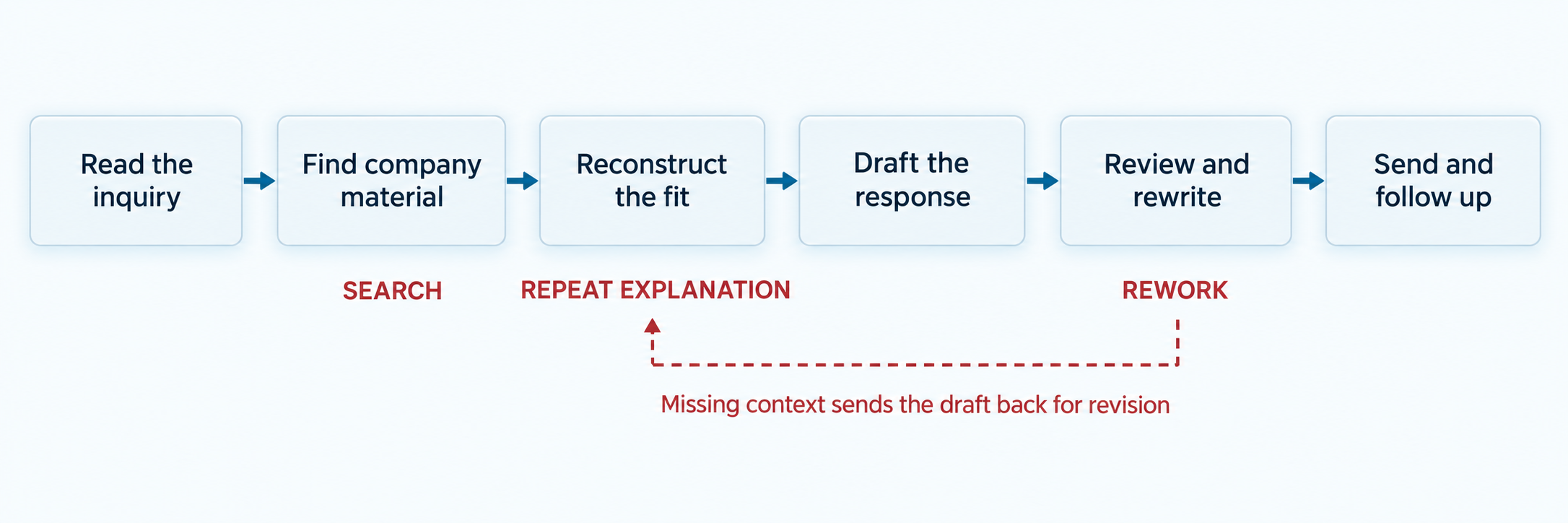
Figure 2. Reconstructed before state based on the work being supported. This is an analytical comparison rather than a documented historical time study.
The redesigned workflow
The owner supplies the inquiry and makes relevant context available. The assistant prepares the analysis and document set in one working process. Review then concentrates on the proposed fit, evidence, open questions and commitments.
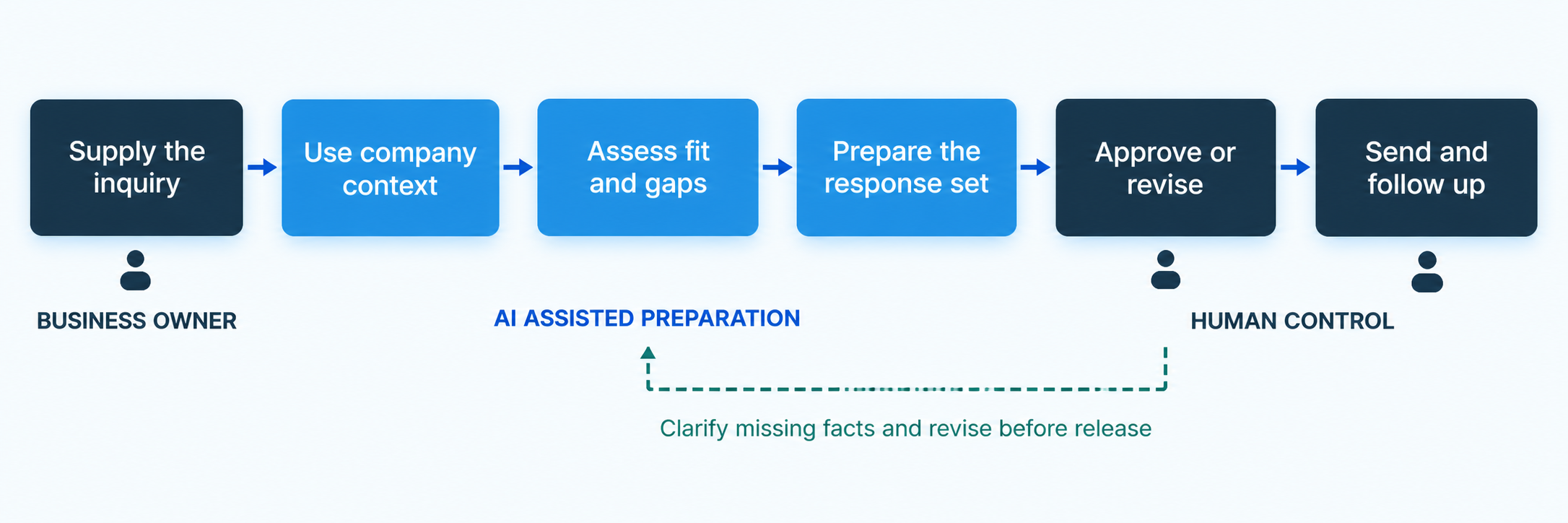
Figure 3. Observed preparation workflow with explicit human release points. Blue stages are AI assisted and the person symbol marks business ownership.
The practical change is that earlier work becomes reusable input to the next inquiry. Source selection and review still matter: the observed workflow relies on the user making relevant material available and directing revisions. Automated mailbox intake, approval routing and follow-up are outside the demonstrated scope.
What the capability does
The assistant’s usefulness comes from connecting the company’s offer to the recipient’s situation. A client asks how a business problem will be solved. A consultant also needs to understand client ownership, delivery responsibilities and the economics of working together.
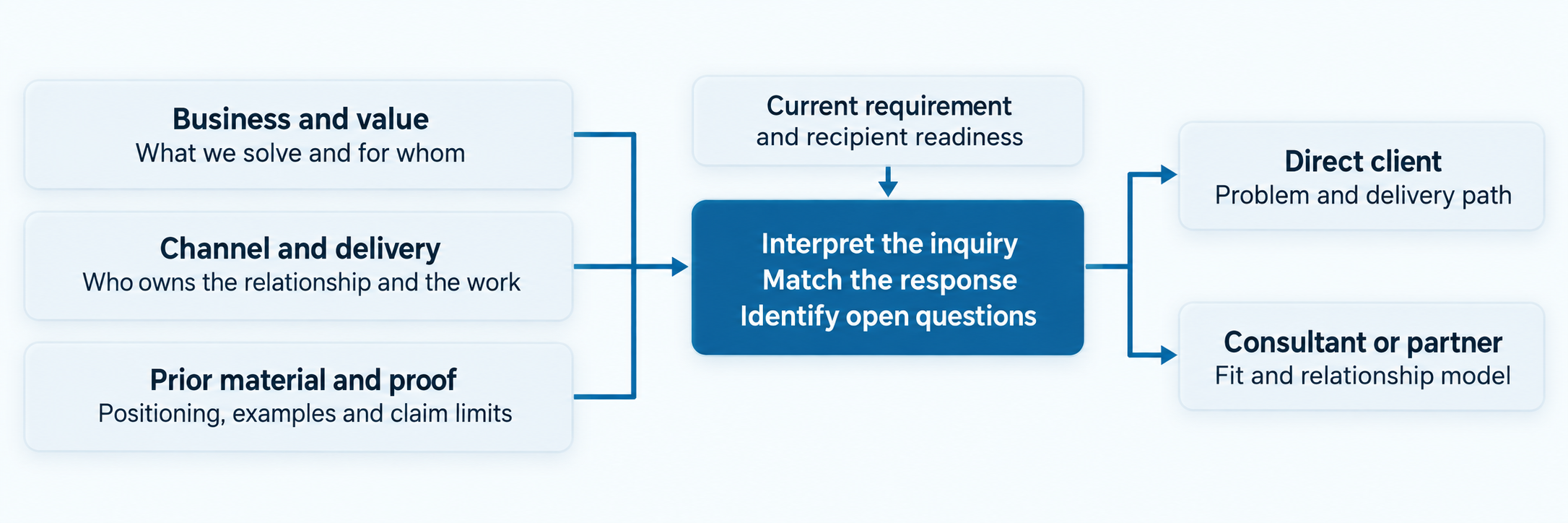
Figure 4. A common base of company context supports different commercial conversations
Business capability | What it contributes to the response |
|---|---|
Interprets the requirement | Extracts the questions being asked, the prospect’s stated priorities and the decision the response needs to support. |
Assesses commercial fit | Connects the request to relevant services and distinguishes an active delivery opportunity from a future referral or partnership possibility. |
Applies the operating model | Explains how operating leadership, specialist capacity, software and automation can support delivery, with clear responsibilities. |
Selects relevant evidence | Uses prior collateral and representative work; separates internal operating examples from external client results and unverified outcome claims. |
Builds a coherent response set | Aligns the cover email, solution or partnership note, proposal structure, open questions and proposed next step. |
Adapts as context develops | Revises the material when leadership supplies new evidence, corrects the positioning or changes the commercial direction. |
Direct client value
The same approach can turn a client requirement into a solution note covering the business problem, a bounded delivery approach, ownership, assumptions and proposed measures. This is a proposed extension of the pattern; the two inquiry examples in this case are partner responses.
Business context is a maintained set of inputs. It is not complete or automatically current knowledge of the organization.
Two inquiries that required different answers
The reviewed inquiries asked overlapping questions about services, partnership arrangements, responsibilities and examples. Their business models and readiness differed. The response drafts reflected those differences instead of treating both as the same opportunity.
Decision | Inquiry A | Inquiry B |
|---|---|---|
What the recipient needed | Specific alignment, delivery capabilities, relevant examples, responsibilities and a commercial model before deciding whether to discuss a partnership. | An explanation of the partner model, project types, economics and client ownership. The sender explicitly preferred information first and no call at that stage. |
How the fit was framed | The partner’s strategy and executive relationships could lead to implementation work supported by the business services firm. | Customers who later wanted help acting on research could create a referral or implementation opportunity. |
What was prepared | A tailored cover email and substantive partnership brief addressing the requested areas and a possible first implementation engagement. | A concise cover email and lighter information note explaining the model and the conditions that could make a later discussion useful. |
What judgment changed | The draft emphasized complementary roles and preserved the partner’s position in the client relationship. | The draft avoided imposing a full consulting-partner structure on a business still developing its core product. |
What the next step supported | Internal review of the proposition, with a discussion if the recipient saw sufficient alignment. | Asynchronous review and a future reconnection when implementation demand emerged. |
The observed effectiveness
The drafts changed the proposition, level of detail and call to action according to the inquiry. They also incorporated additional company examples when the owner supplied them, while preserving the distinction between internal operating work and externally measured client outcomes.
A useful commercial response can advance a discussion, clarify fit or preserve a future opportunity. Its quality cannot be judged by meeting requests alone.
Evidence boundary. The source inquiries and tailored drafting record were reviewed. Prior project history records the preparation of Word response packages. Sending, recipient reaction, subsequent meetings and deal outcomes were not verified.
Effectiveness and efficiency create different value
Effectiveness concerns whether the response helps the right commercial decision. Efficiency concerns the effort and elapsed time required to produce an approved response. Both matter, and they need different evidence.
Dimension | Evidence in this case | Expected business benefit |
|---|---|---|
Effectiveness | The two drafts used different partnership propositions and different next steps. | More useful conversations because the response matches the recipient’s actual situation. |
Effectiveness | The response material linked services, responsibilities, commercial structure and examples. | Fewer contradictions across the email, attachment and subsequent discussion. |
Effectiveness | The drafts distinguished representative internal work from externally measured outcomes. | Stronger trust through claims that the business can substantiate. |
Efficiency | Existing company context and prior material were reused to prepare the responses. | Less repeated searching, explanation and rewriting for each new inquiry. |
Efficiency | Analysis and first drafts were prepared for owner review and refinement. | More leadership attention available for qualification, negotiation and relationship judgment. |
The evidence column describes the reviewed work. The benefit column states expected effects; it is not a report of measured improvement.
How to measure the next set of inquiries
Measure | Suggested comparison |
|---|---|
Approved response time | Track inquiry receipt to human approval. Report median and slowest-decile times, separating waiting for missing inputs. |
Total preparation effort | Record staff and leader minutes, including research, drafting, review and revision. Compare inquiries of similar type and complexity. |
Response quality | Assess question coverage, relevance, factual corrections, commercial consistency and substantive revisions against an agreed rubric. |
Commercial progression | Track the intended next step by inquiry type: clarification, qualified discussion, proposal, later follow-up or a justified no-fit decision. |
Compare an initial baseline with a subsequent assisted cohort. Include context maintenance and review costs. Measure conversion separately over time; it also depends on lead quality, demand, pricing and sales execution. No numerical savings or ROI is claimed in this case.
Human control makes the pattern reusable
The assistant prepares commercial material; an accountable business owner decides what the company will say and do. The observed work shows owner direction and revision. The controls below define how to make that practice repeatable as more people and inquiries enter the workflow.
Control point | Human responsibility |
|---|---|
Context and evidence | Keep a dated source of truth for positioning, capabilities, approved examples and commercial terms. Restrict access by role and use permissioned material. |
Uncertainty and feasibility | Resolve missing or conflicting facts. Confirm delivery capacity, scope, timing and any security or contractual requirements with the relevant owner. |
Commercial release | Approve claims, pricing, margins, partner roles and commitments. Check that the email and attachment agree. Record the approved version and authorize sending. |
Learning from use | Capture corrections and recipient feedback. Update reusable context after review and track whether response quality and total effort improve. |
A reusable operating pattern
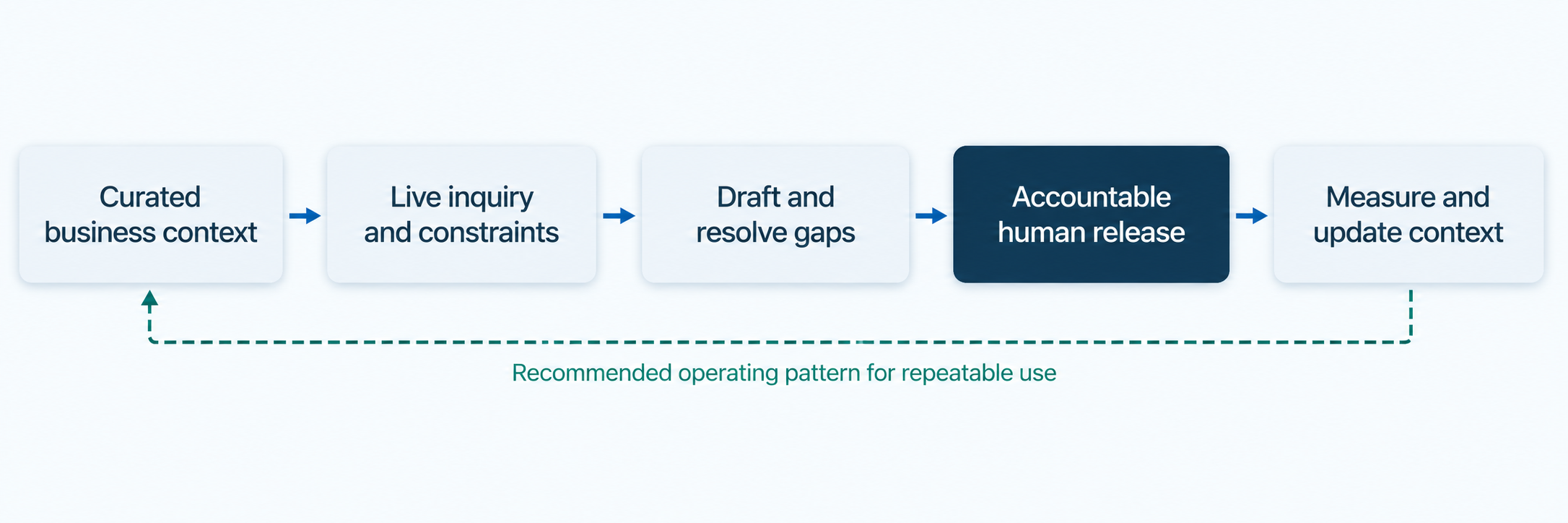
Figure 5. Recommended controls and feedback for repeated use. These are an operating design rather than a claim that every control is already automated.
The pattern is useful where requests vary but depend on a common body of organizational knowledge: professional services proposals, enterprise presales, channel partnerships and account expansion. Begin with one inquiry type, a small set of approved sources and a named commercial reviewer. Expand only after output quality and total effort have been assessed.
The transferable capability is to reuse company understanding while adapting the answer to each buyer. Human ownership keeps the response aligned with what the business can deliver.
Evidence and scope
Prepared from two inbound partner inquiries, the company’s consultant one-pager, prior project discussions and tailored response drafts, user-supplied operating examples, and a review of the public website in September 2026. Names, contact details, domains, proprietary labels and commercial figures have been omitted. Source descriptions are generalized to preserve anonymity. The before state is a reconstruction; benefit estimates have not been substituted for measured results.
ANONYMIZED CASE STUDY